Burkholderia, friend or foe?
The genus Burkholderia has great biotechnological potential, yet some species and strains hold pathogenic features.
The long-term goal of this research program is to unleash Burkholderia’s biotechnological potential by the development of synthetic biology tools. We are identifying and characterizing Burkholderia genetic elements that control pathogenicity, growth, survival, and energy production. We are reducing pathogenicity while enhancing other capacities to engineer fully controllable Burkholderia strains.

Species classically classified as pathogenic or beneficial are shaded in red or green, respectively. Blue and yellow diamonds denote outliers: species with also biotechnological interest or found to cause infections, respectively.
CRISPRi technology
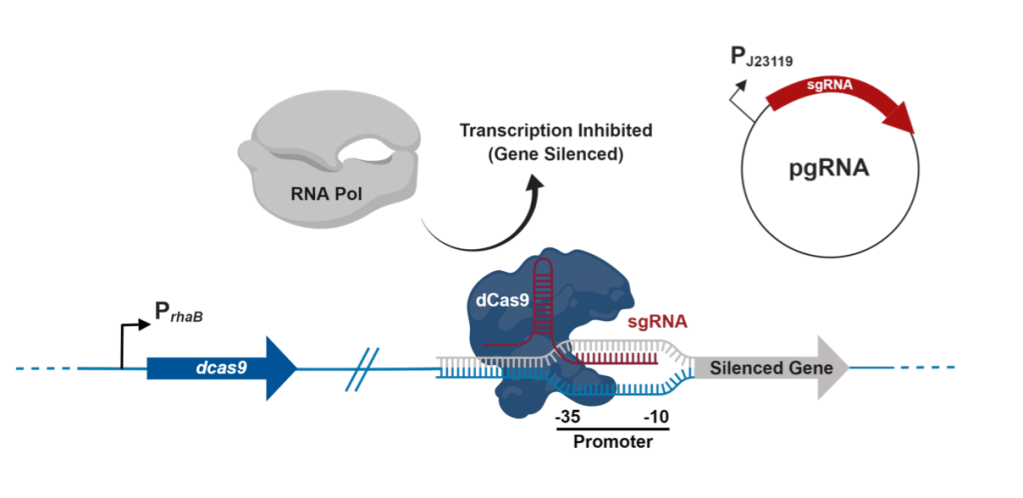
Our laboratory has developed several genetic tools that can be applied in gene and genome editing to genetically manipulate Burkholderia strains. We have adapted CRISPR-based interference (CRISPRi) to Burkholderia strains. CRISPRi for Burkholderia is available through the plasmid repository Addgene.
CRISPRi silences native gene expression with a catalytically inactive or dead endonuclease Cas9 (dCas9). A single guide RNA (gRNA) is designed toward the 5′ end of the target gene. The dCas9 forms a RNA-protein complex that recognizes the DNA targeted region, sterically blocking transcription initiation.
Screening Burkholderia for bioplastic degradation
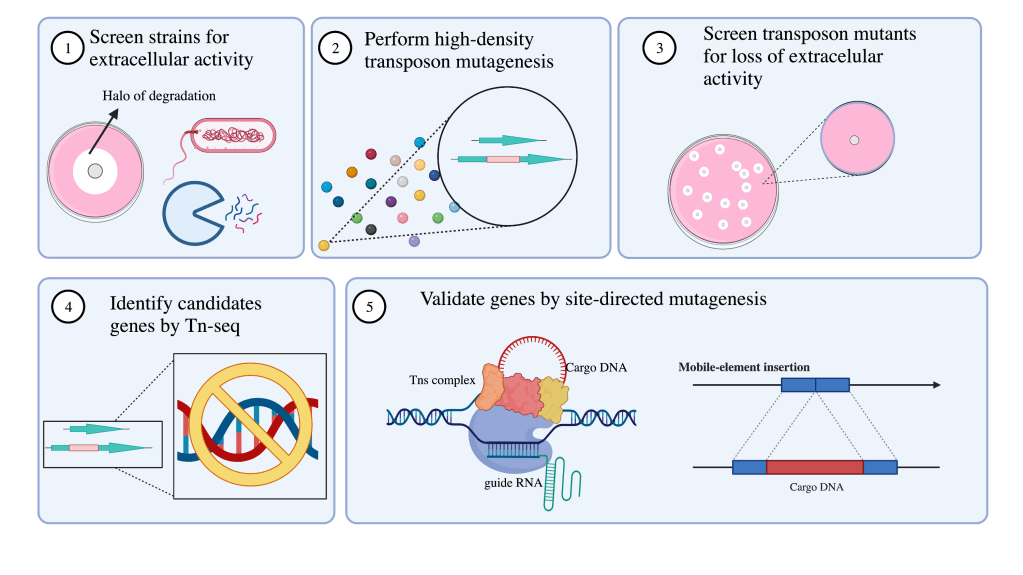
In collaboration with Dr. David Levin, From Biosystems Engineering, U. of Manitoba, we are looking into the ability of Bcc bacteria to degrade polyesters used in the production of biodegradable plastics. Once the most active strains are identified, we will study the specificity of the bioplastic degrading enzymes and the genetic elements involved. The next step will be to edit the strain’s genome to produce a strain active regarding biodegradation, but defective in terms of pathogenicity.
 Cardona Lab